Catch Installation Defects Early
Identify abnormal conditions before the installation is fully handed over to the owner or maintenance team.
COMMISSIONING INSPECTIONS
ThermaVista provides thermal commissioning inspections for new photovoltaic and electrical installations. Our inspections help owners, EPC contractors, commissioning teams, and facility managers identify abnormal conditions before turnover, establish baseline asset condition, and document findings for corrective action.
ENERGIZED DOES NOT ALWAYS MEAN CORRECT
A newly installed system may energize successfully, communicate with monitoring equipment, and produce power while still containing connection problems, installation defects, module abnormalities, load imbalances, or other conditions that are not apparent during conventional visual inspection.
Thermal inspection adds another layer of verification by observing equipment while it is energized and operating. Abnormal heat patterns can identify areas that deserve additional investigation before project acceptance.
That makes thermography particularly useful near the end of commissioning—when the system is operational, warranties are active, and corrective work is still easier to assign and document.
WHY THERMAL COMMISSIONING
Commissioning inspection is valuable not only because it finds anomalies, but because of when those anomalies are found.
Identify abnormal conditions before the installation is fully handed over to the owner or maintenance team.
Document findings with specific equipment locations and thermal evidence that can be assigned for corrective action.
Record issues while installation and equipment warranties are still active and responsible parties remain engaged.
Create a documented thermal condition that can be compared against maintenance inspections in future years.
COMMISSIONING SCOPE
The strongest commissioning program combines aerial PV thermography with ground-based electrical inspection.
Aerial thermal inspection can rapidly evaluate large areas of photovoltaic modules under operating conditions.
Ground inspection can evaluate the balance-of-system equipment that connects the array to the facility electrical system.
Electrical thermography can be extended downstream into accessible distribution equipment.
COMMISSIONING FINDINGS
| Observation | Possible Condition | Commissioning Value | Typical Follow-Up |
|---|---|---|---|
| PV module hotspot | Cell defect, localized damage, mismatch, shading, or module abnormality | Identify affected modules before project turnover | Module evaluation and warranty review |
| String-level thermal difference | Open circuit, mismatch, shading, or wiring issue | May reveal reduced production not obvious from visual inspection | String current and voltage testing |
| Connector or termination hotspot | High resistance, poor connection, contamination, or installation issue | Supports targeted corrective work prior to acceptance | Qualified electrical evaluation |
| Breaker or fuse heating | Load issue, poor contact, device condition, or connection abnormality | Identifies equipment requiring investigation before handoff | Load verification and electrical testing |
| Phase temperature imbalance | Load imbalance, connection issue, or unequal resistance | Provides evidence for additional electrical verification | Phase loading and connection evaluation |
| Transformer termination heating | High-resistance connection or installation-related issue | Helps identify problems before long-term operation | Electrical inspection and corrective action |
COMMISSIONING WORKFLOW
Thermal commissioning is most useful when it is integrated into project turnover rather than treated as an isolated inspection.
Review drawings, equipment schedules, asset lists, project scope, and commissioning requirements.
Confirm access, safety requirements, energization status, loading, and environmental conditions.
Capture thermal and visible imagery of PV and electrical assets under suitable operating conditions.
Evaluate abnormal thermal patterns and compare similar components, phases, modules, and equipment.
Document findings with location, imagery, measurements, priority, and recommended follow-up.
Support corrective action and, where required, re-inspect completed repairs or resolved findings.
STANDARDS-ALIGNED INSPECTION
Provides guidance for outdoor infrared thermography of operating photovoltaic modules and plants, including data acquisition, environmental conditions, equipment, analysis, and reporting.
Provides a commissioning framework for electrical power systems and helps support verification that installed systems meet project requirements and intended operation.
Addresses acceptance testing and inspection used to evaluate newly installed electrical equipment before final acceptance and long-term service.
ThermaVista should describe its services as aligned with or informed by applicable standards unless a specific certification, accreditation, or formal authorization is held.
LONG-TERM VALUE
Without a commissioning baseline, maintenance teams may discover a thermal anomaly years later without knowing whether it is new, stable, or worsening.
Baseline data gives future inspections context.
COMMISSIONING DELIVERABLES
ThermaVista commissioning reports are structured so findings can be reviewed by the owner, EPC, commissioning team, electrician, equipment manufacturer, or O&M provider.
PROJECT VALUE
Identify unresolved conditions before the project transitions from construction responsibility to owner responsibility.
Provide specific locations, images, and findings rather than vague descriptions of suspected problems.
Create time-stamped evidence while equipment and installation warranties remain active.
Provide independent documentation that the operating system was inspected after energization.
Direct electrical and O&M teams to the exact components that warrant further investigation.
Start the asset's thermal condition record at commissioning rather than years later.
SOUTHERN CALIFORNIA
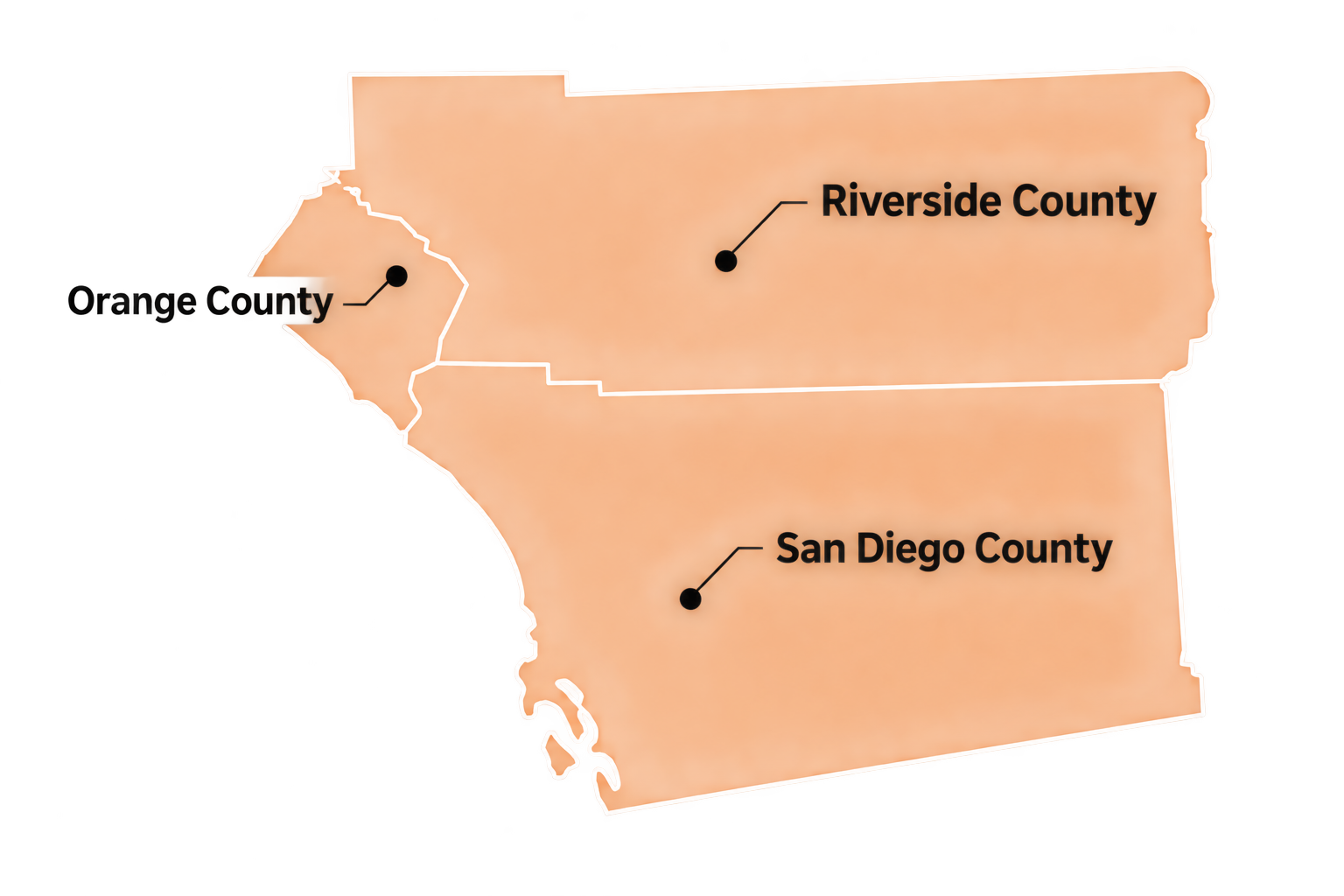
ThermaVista is based in North County and provides commissioning thermography throughout:
Typical projects include commercial rooftops, solar carports, schools, municipal facilities, industrial sites, commercial campuses, and distributed-generation installations.
FREQUENTLY ASKED QUESTIONS
The inspection should generally occur after the system has been energized and can operate under meaningful load. For PV systems, suitable solar irradiance and environmental conditions are also required for useful thermal evaluation.
No. Equipment may energize and operate while still containing connection issues, load imbalances, module abnormalities, or other conditions that are not apparent during startup or visual inspection.
Yes. Thermal findings can be documented with equipment identification, location, visible imagery, infrared imagery, temperature data, and recommended follow-up so they can be assigned and tracked through project closeout.
Yes. Re-inspection can be used to document post-repair thermal condition when the equipment can be safely operated under suitable load and inspection conditions.
No. Thermography can support commissioning of a wide range of electrical systems, including switchgear, transformers, panelboards, disconnects, distribution equipment, inverters, and other energized electrical assets.
Commissioning thermography evaluates newly installed or newly modified equipment and establishes initial condition. Maintenance thermography evaluates equipment already in service and is often used to detect deterioration or compare conditions over time.
REQUEST AN INSPECTION
Contact ThermaVista for commissioning, maintenance, or targeted electrical thermography throughout San Diego, Orange, and Riverside Counties.